

Nicki Washington
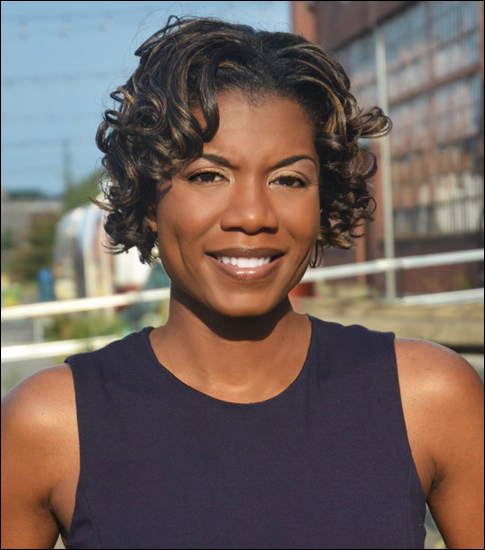
ACM Frances E. Allen Award for Outstanding Mentoring
USA - 2025
citation
For exceptional commitment to diversifying the computing community at all education levels, demonstrating creativity and breadth in her approaches.
Dr. Nicki Washington embodies the spirit of outstanding mentoring through her direct mentoring of individuals and her visionary leadership in establishing mentoring programs and communities.
Dr. Washington led the development of the Googler-in-Residence program at Howard University. This program was originally proposed to have Black Google software engineers serve as guest lecturers in introductory CS courses. However, after discussions with Google leadership, this was extended to a Googler serving as a full-time instructor in the department for one semester, providing additional interview training and other mentoring opportunities for undergraduates. This program was piloted at Howard, but extended to other HBCUs in subsequent years, and ultimately led to the development of the Google Tech Exchange program where students from HBCUs(Historically Black Colleges and Universities) and Hispanic-Serving Institutions (HSIs) spent one semester at Google working on applied problems and building more community among themselves as well as Googlers.
In her current role at Duke University, Dr. Washington’s impact on the greater CS education community is evident by her leading the Alliance for Identity-Inclusive Computing Education (AiiCE). AiiCE focuses on providing more equitable and inclusive spaces for K-16 students who are underrepresented in computing based on not only race, but also gender, sexuality, socioeconomic status, and ability.
Finally, in addition to individual mentoring, Dr. Washington has innovated scalable mentoring through the Cultural Competence in Computing (3C) Fellows program she co-directs. The 3C Fellows program provides professional development for computing educators on topics related to identity, equity, and inclusion. Through virtual meetings, participants learn about racism, bias, discrimination, and other issues that impact marginalized groups in computing. They reflect on their own positionalities and learn practices for making computing more inclusive. This program has reached over 15,000 students through the development of 115 identity-inclusive computing deliverables, including courses, modules, workshops, and panels.
ACM Karl V. Karlstrom Outstanding Educator Award
USA - 2023
citation
For their work towards changing the national computing education system to be more equitable and to combat unjust impacts of computing on society.
Dr. Alicia Nicki Washington (Cue Family Professor of the Practice in the Computer Science and Gender, Sexuality, & Feminist Studies Departments at Duke University) and Dr. Shaundra Daily (Cue Family Professor of the Practice in the Electrical and Computer Engineering and Computer Science Departments at Duke University) have been named the recipients of the Karl V. Karlstrom Outstanding Educator Award for their contributions to changing the way computer science is taught to create a more equitable landscape of computing education for all. They have had a critical, wide-reaching impact on educating the broader community of computer science educators and have had this impact through a novel course, a national training program, and a national alliance.
In 2020, Dr. Washington developed the Race, Gender, Class, & Computing course ? a first course aimed at computer science majors that grounds the discipline of computing in history, sociology, and critical race and gender studies so that students develop a deep understanding of the roots of the inequities in computing and computing's impact on different groups. She regularly teaches this course at Duke University.
Building off interest in the course material, in 2020, Dr. Washington, Dr. Daily, and graduate student Cecilé Sadler founded the Cultural Competence in Computing (3C) Fellows program ? a program in which faculty, staff, postdoctoral researchers, and Ph.D. students from across North America, Africa, Europe, and Australia learn about identity, different forms of oppression, intersectionality, and how they manifest in academic computing environments and technologies. The program's design is ambitious and brilliant, combining intensive background reading and homework with guest talks from luminaries in the field and guided discussion between educators across the world. The final requirement is for participants to develop a sustainable project (course, policy, or other activity) at their organizations, thus multiplying the program's impact.
In 2021, Dr. Washington and Dr. Daily grew the 3C Fellows program into the Alliance for Identity Inclusive Education in Computing (AiiCE), supported by a $10 million National Science Foundation INCLUDES grant. AiiCE uses a collective approach to "transform high-school and postsecondary CS education using identity-inclusive strategies that target people, policies, and practices." AiiCE includes key partners such as the Computer Science Accreditation Board within ABET; Disabilities, Opportunities, Internetworking, and Technology (DO-IT) Center/AccessComputing; Georgia Tech Constellations Center for Equity in Computing; Computer Science Teachers Association (CSTA); University of Oregon; Bard College; Mount Holyoke College; Duke University; and strategic partners such as Reboot Representation, Northeastern University Center for Inclusive Computing (CiC), Duke University Center for Computational Thinking (CCT), and The Rathmann Family Foundation. In just two years, AiiCE boasts the following national impacts: 1,184 K-16 educators directly impacted, 9,387 undergraduate students and 104,784 K-12 students indirectly impacted, 126 courses and modules created, 30,000+ social impressions per month, and over 10,000 online video views. AiiCE has the potential for significant impact across the entire K-12 and postsecondary CS education landscape to an extent that is simply unmatched by any prior curriculum or broadening participation initiative undertaken in CS to date.
Dr. Washington and Dr. Daily's leadership in CS education has been both as change agents and as change catalysts. Their novel and groundbreaking work demonstrates the importance of collective impact to achieving wide-reaching, sustainable, and identity-inclusive change in computing education.