

Gilles Brassard
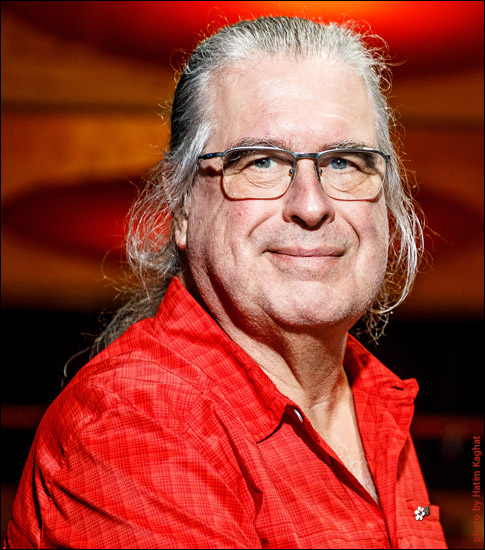
ACM A. M. Turing Award
Canada - 2025
READ FULL CITATION AND ESSAYcitation
For their essential role in igniting and shaping the quantum revolution in computer science and in information and communications technology
Charles H. Bennett and Gilles Brassard are the recipients of the 2025 ACM A.M. Turing Award. They are two of the founders of a new field, quantum information science, which lies at the intersection of physics and computer science and has fostered exciting collaborations between scientists in both areas. Further impetus to this development was the concurrent interest in general quantum computation. Quantum information science is a scientifically fundamental and deep topic, with enormous practical relevance. It has motivated and triggered remarkable technological advances, with many foreseen and unforeseen application areas.
Bennett and Brassard’s joint 1984 paper (BB84), “Quantum cryptography: Public key distribution and coin tossing”, inspired by the insights of their late collaborator Stephen Wiesner, is a transformative moment in the history of computer science. It showed that quantum physics can solve a major problem, namely secret communication between parties sharing little or no prior secret information, in a way resilient to adversaries regardless of their computational power and technological sophistication. In his 1949 paper on the optimality of the one-time pad, Shannon proved that this task is impossible to achieve by classical communication alone. Meanwhile, an alternative solution to the key establishment problem, public key cryptography, became the foundation of 21st century cryptography and computer security, resulting in the 2002 and 2015 Turing Awards. It circumvents Shannon impossibility by limiting the computational power of adversaries. Its widespread adoption attests its convenience and compatibility with existing infrastructure, but it rests on a foundation arguably weaker than the correctness of quantum physics, namely the assumed existence of “trapdoor” functions (an assumption stronger than P≠NP). In sharp contrast, the BB84 quantum key establishment protocol achieves information-theoretic security with no computational assumptions, but it requires a special hardware infrastructure.
Ironically, a decade after the invention of BB84, Peter Shor proved that quantum algorithms can quickly factor large integers and compute discrete logarithms, the most used trapdoor functions. Thus the (generally exciting) possibility that quantum computers become practical will undermine today’s security infrastructure, requiring new computational assumptions—the existence of quantum-resistant public key cryptography, again stronger than P≠NP—or alternatively the broader integration of quantum cryptography into that infrastructure. While general quantum computing has not yet been achieved, BB84 has been implemented in large networks across the globe.
Bennett and Brassard’s 1984 paper also goes beyond key establishment, initiating the general theory of quantum cryptography. It presents a quantum protocol for another central cryptographic primitive, collective coin-flipping, but then goes on to explain how that protocol can be subverted by use of quantum entanglement. Doing so was the first demonstration that entanglement is relevant to cryptography, ultimately leading to a mature theory of entanglement-based-quantum cryptography, an approach usefully complementary to the original BB84 key establishment protocol.
In twenty-six joint papers, and in hundreds with other collaborators, Bennett and Brassard continued to explore the new world in which quantum mechanical effects are used in computation and communication. For example, their joint 1993 paper introduced “quantum teleportation”, showing how an arbitrary quantum state can be transmitted using only classical information between entangled parties. This fundamental discovery is at the heart of numerous papers, and its experimental verification was recognized by the 2022 Nobel Prize in physics. Indeed, the study of entanglement, the mysterious and unintuitive notion of quantum correlation, was explored in many of their works. In 1996, Bennett, Brassard, and various collaborators developed the idea of “entanglement distillation”, showing how to enhance a low-quality entanglement into a near perfect one.
Their body of work, ideas, lectures and students in the past decades has had an enormous influence on the fields of quantum information and quantum computing theories and practice. Within computer science, the introduction of quantum theory into different computational models has influenced many subfields including, besides cryptography, algorithm design, computational complexity, learning theory, interactive proofs, and more, some with surprising consequences in mathematics and mathematical physics.
This lifelong collaboration between a physicist and a computer scientist has led to numerous such collaborations and synergies between these two fields, making the quantum revolution what it is today.